December 2025 Newsletter

CDS December 2025 Newsletter

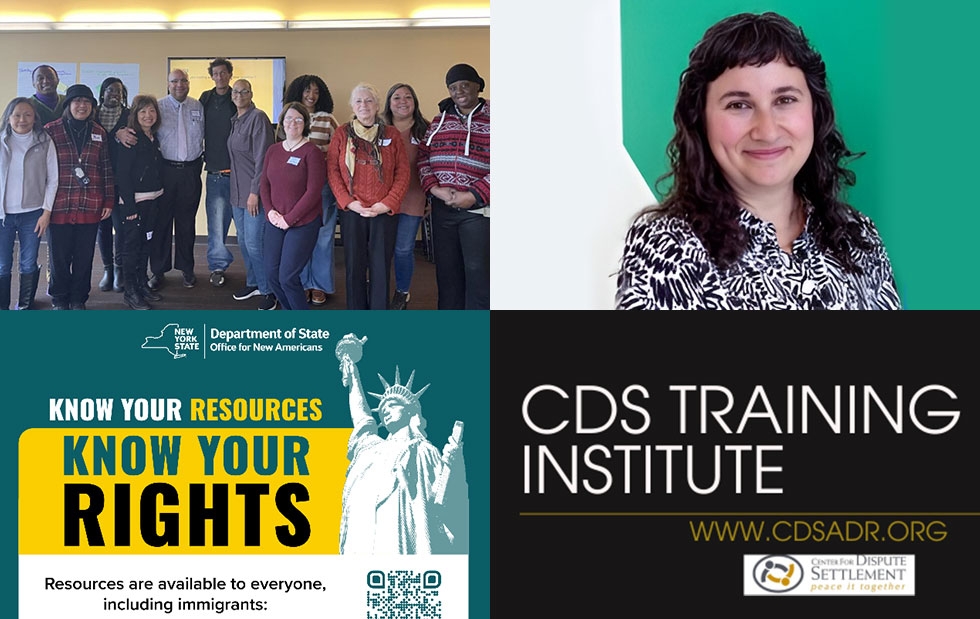
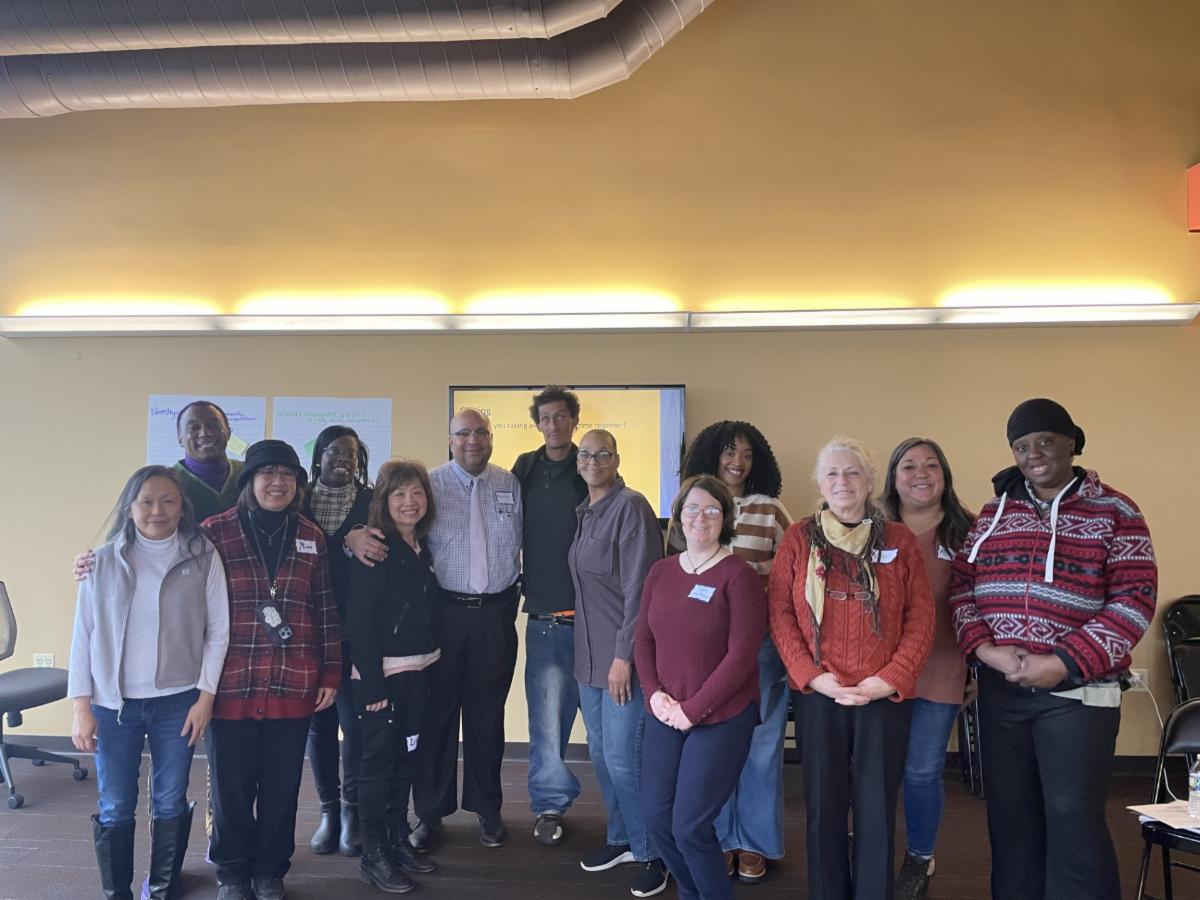
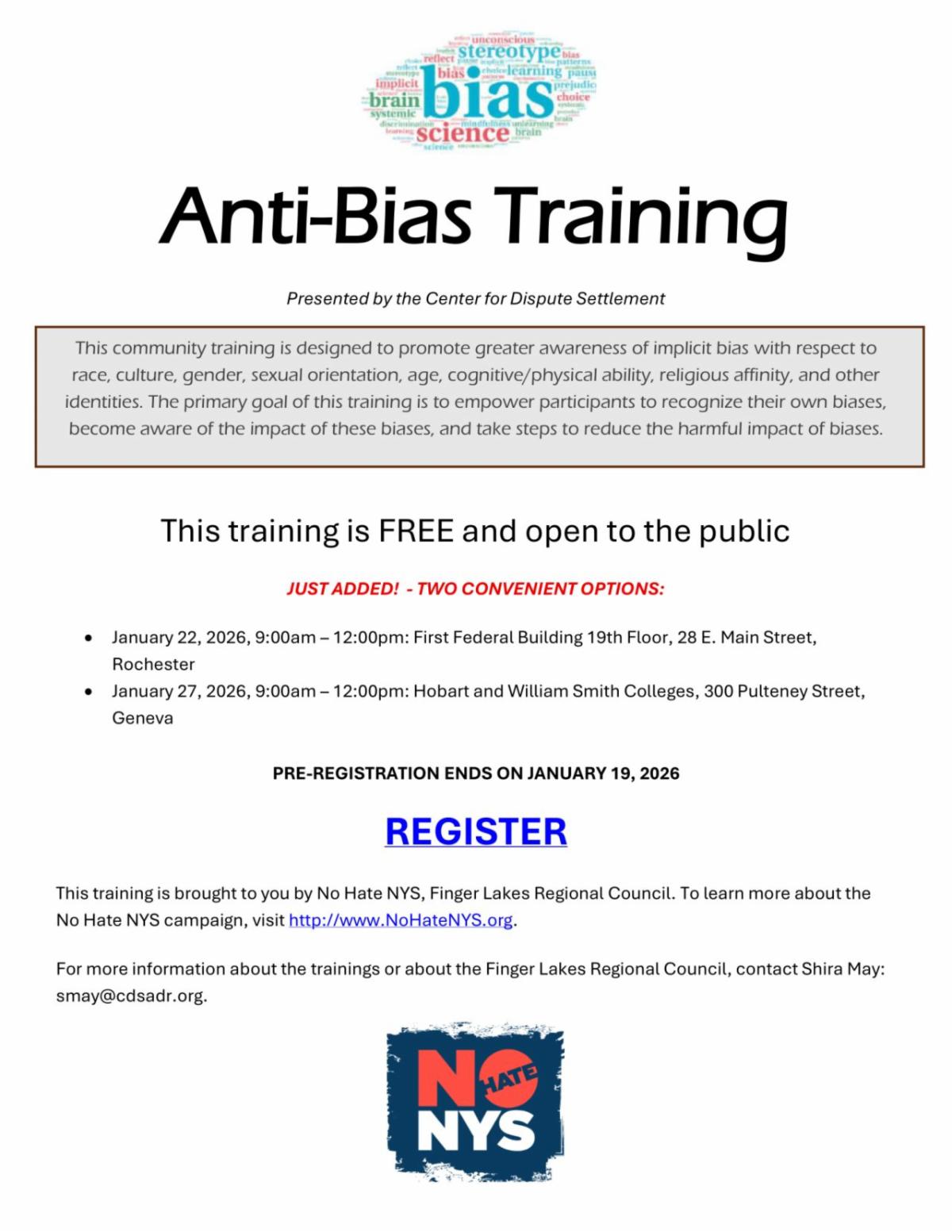
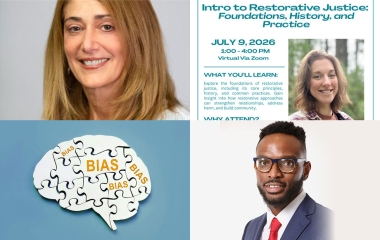
Anti-Bias Training

November 19, 2025

Trainers: Shira May, CEO/President

Michelle Mitchell, Ontario County Program Manager

CaTyra Polland, Community Engagement & Training Coordinator


Feeling Hopeful

Kevin Beckford

Center for Dispute Settlement Board Member


The Center for Dispute Settlement’s Anti-Bias Training and the No Hate NYS campaign were deeply impactful. Listening to the personal stories shared during the session reminded me how our lived experiences shape how we see the world ~ often without our awareness.


From childhood onward, we absorb messages from our families, communities, schools, workplaces, and social environments. These influences shape biases within us — not because we are bad people, but because we are human. These biases don’t ask permission; they simply arrive and begin to influence how we think, how we make decisions, and ultimately, how we treat others.


That’s why this training mattered so much. It brought those realities to the surface with compassion rather than judgment. It reminded us that bias is not a moral failing ~ acting on it without awareness is where harm can begin:


It can affect who gets hired and who gets overlooked

Who is trusted and who is dismissed

Who gets developed, mentored, promoted ~ and who doesn’t

How we preserve someone’s dignity when they are different from us


This training encouraged us to pause before acting on the first thought that “pops into our mind.” Bias becomes dangerous only when it moves from thought to action without reflection. With awareness, empathy, and courage, we can respond to each other more thoughtfully and honor the humanity in every person.


I left the training feeling hopeful ~ not because bias disappears, but because understanding it gives us a chance to choose differently.


Bias is Normal, But Not Right

Cili Phillips

Mediator/Case Manager, Monroe County Office 


I attended CDS’s November’s anti-bias training along with over a dozen participants who represented a wide range of individual, cultural, and professional interests.  The training was sponsored by No Hate NYS , NYS Division of Human Rights, and the Finger Lakes Regional Council. 

What stood out was that many of the participants already had anti-bias training under their belts, yet there was an acknowledgement that the purpose of this training is to increase awareness of bias in ourselves and in the workplace, to offer ways to manage bias, and to reduce and/or mitigate its effects. Our collective experiences led to very lively discussions about how bias shows up in their workplaces and how it impacted their own lives. 


My experience with bias in the context of this training is from a mediator’s point of view. I can attest to its impact on the mediation process. On one level, every story has multiple sides. Yet, a mediator’s bias toward one side can appear to privilege one party over another and challenge the central ethical practice of neutrality. Bias can also get in the way of being open to the possibility that everyone can change and grow, and that each individual has the capacity and wisdom to offer a creative solution.  As members of the transformative mediation community, we aim to transform a crisis in human interaction into a mutually rewarding cycle of empowerment and receptivity, the very antipathy of bias that assumes there is a binary ideal of perspective, an inherent “rightness” depending on where one lands. 


One of the key takeaways is how bias is normal to human experience. It’s a defensive mechanism that helps recognize potential threats.  But just because bias arises, doesn’t mean that it’s true. Rather, bias often reflects learned beliefs from society, our families, and cultural and religious upbringing. Learning to manage bias is a process of discernment, so it’s not all or nothing. However, the consensus from the group is that addressing bias is as much an internal process as challenging those around us who engage in destructive behaviors like microaggressions, stereotyping, and discrimination. Those behaviors send a message of otherness and create an environment of alienation and rejection. Practicing viewing others through a lens of higher values encompassing curiosity, kindness, empathy, and compassion engender a culture of inclusivity and belonging, welcoming everyone’s gifts and unique contributions to the community. These lessons are so essential, now more than ever, in the world we live in today. Anti-bias work is a creative process and an exciting journey where we can enjoy the sweet “taste” of new ideas and perspectives outside of our own experiences.  


Advanced Regional Training:

Puzzling Our Way Through - Practical Approach to Resolving Ethical Dilemmas


  • Open to CDRC staff and volunteer certified mediators 
  • January 28 & 29, 2026 1-4:15 p.m.
  • Virtual
  • Free training, sponsored by the NYS Unified Court System


Presenter: Elena Sapora


Sometimes as mediators we must make challenging process decisions in the face of ethical dilemmas. How do we equip ourselves with the knowledge, skills and ability to make sound choices that comport with our ethical guidelines? During this interactive workshop we will share our own experiences of ethical dilemmas, explore hypothetical situations, and practice tools to for resolving ethical dilemmas in mediation. 


About Elena


Elena Sapora brings decades of experience in facilitating dialogue, mediation practice and training. As a certified Initial Mediation Trainer with the New York State Unified Court System she has trained hundreds of individuals in the art and practice of facilitative mediation. In all her work, Elena strives to embody the values of anti-racism, equity, and social justice.


She has also worked as a Director and Administrator within the Community Dispute Resolution Centers Program in New York State. She served as the founding Director of Operations for the New York Peace Institute, where she oversaw case management, budgeting, IT and HR systems. Elena was also the lead trainer at the New York Peace Institute from 2009 through 2013. In addition to the professional experience described above, Elena has presented on various topics at local and national annual conferences, such as the Association for Conflict Resolution (National and Greater New York chapter), the American Bar Association Dispute Resolution Section, and the New York State Dispute Resolution Association. 


Elena is currently pursuing a Master of Science in Negotiation and Conflict Resolution at Columbia University, with an anticipated graduation date of May 2026. 


Could This Happen in Your Program?:

 The Podcast

The Surrogate Decision-Making Committee Program team of the

Justice Center for the Protection of People with Special Needs team was recently highlighted on the Justice Center (JC) Podcast series called “Could this Happen in Your Program” that was launched this year.


Episode 7 highlights Surrogate Decision-Making Committee services and how it provides a timely, personalized, and person-centered approach to making non-emergency and end-of life care decisions. The SDMC Director Vicki Clingan and SDMC Nurse Case Processor Cindy Pross were featured guests.


Staff Birthdays


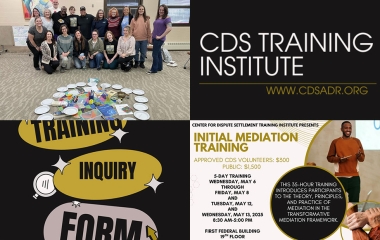
Request CDS Training


If your organization, school, or business is interested in training by the Center for Dispute Settlement, please submit a training inquiry form.

Follow us on Instagram!


Did someone forward this newsletter to you? If so, you can subscribe for the latest CDS updates and announcements.

Will you help make a difference today?